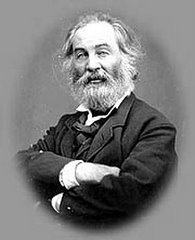
Big Frank has been on the move lately and when one is moving matter, well then, matter takes precedence. As a result boxes were arranged and rearranged but words were not. While some may think that Big Frank is on the lam - not true; he's just moved. However speaking of "on the lam". What a great expression. It's also quite old with a kind of gangster connotation going back over one hundred years. Its origin goes back to the 16th century and stems from the Old English meaning of lam - "to beat". So as with 'beat it' so lam also has the allusion to leave, beating a path away.
One wouldn't think that someone "on the lam" would be capable of leadership. What are the implications of a leader who is not physically within the same context as those being led. In this present age where "global" becomes the recognized context that we all acknowledge, we all potentially could be leaders of any group. That is, the present technological aids to communication enable just about anyone anywhere to influence anyone else anywhere else. This is the productive capablity. Perhaps even more important is the receptive authority - the desire by the audience to be led by the person in exile. There are people who at times look only to the absent for leadership - looking to the person in exile - the leader on the lam.
There are situations where the audience - the followers - imbue a leader with even more potential power than that leader in fact claims. For example the Dalai Lama could have autocratic control over Tibetans if he wanted. Similarly Pope John Paul II during the 1980s in Poland could have been crowned king had he so desired. In these cases it is only the restraint of the leader that curtails their control of the self-captive group.
On the other hand there are examples where the leader in exile is in essence granted less real power by the target followers than the leader claims. Good examples of these are, for examaple the widow of the Shah of Iran between 1979 and 1980, Regent-in-exile Dowager Empress Shabanou Farah Pahlavi of Iran. Similarly Jaroslawa Stecko while living in Germany took over from her husband as President of the Ukrainian State between 1986 and 1991. Neither of these had much of any authority or audience among the group they claimed to lead.
Three of the above 4, all but the Pope, could be described as "Leaders on the Lam". These are leaders who are kicked out, replaced or banned from the group that they claim to lead. Yet they don't accpet that change. It's as though the president of a company would claim after having been fired to not accept the change in position. So, for example, the CEO of Exon could be fired, yet still calim to lead that company. This, as far as Big Frank knows, has never happened. Why is that? What is there about political and religious leadership that makes them less willing to reliquish control than in business or education. I think the answer is moral authority. When morality raises its head, it then can trump all others.
So what does this mean for the man in the street? How about the kid in the alley, or the grandma in the restaurant? This is something that Big Frank notes that few have been talking about lately. Perhaps its time to start the ball rolling. Leadership on the Lam - is it a good thing? Perhaps its time to examine this. With all the leadership training programs, leadership degrees, and leadership books, Big Frank throws Leadership on the Lam into the mix. There is a spiritual analogy both internally and externally that can be drawn on for precedence and for efficacy. The One who calls the shots - he/she who got this all started - that One initiated and then withdrew and all have been looking to that One for guidance ever since the withdrawal - typically dated as post Big Bang, but given that nobody really knows if that One was around prior to the Big Bang - or for that matter whether there even was a pre-Big Bang then we shall have to confine our speculation to the post-Big Bang era. So within the external spiritual world the Leader is viewed by many as being "On the Lam". And yet, the whole universal unit is working - and many would say that the kit and kaboodle is getting better and better - so the leader seems to be doing an OK job - I mean - this is some big organization to run and it is running - 13 billion years and counting. OK, what about the internal spiritual ones - divine spark within and all that. Here again it's "Leadership on the Lam" in that the vast majority of us are not enlightened and really not in control of what happens in our lives. Our minds think they are, and can spin very rational sounding explanations for why we do what we do and why others do what they do etc. etc., but this has little relationship to the true nature of events. However, our true "Self" knows all and like a guardian angel looks after the remainder of us - all those other bits besides the "Self". After all just like a driver needs a car so to the "Self" needs a body, mind, etc. to get around in. And even though many of us feel like we are going to hell in a handbasket we are moving ahead and will in time learn what to do and what not to do. We will learn this not through the acknowledgements of the car we ride around in; no, we will learn this from our leader on the lam - our Self. The truly best leaders are those "ON THE LAM".
And that then turn this all upside down. Look at the Leader on the Lam - he won't abandon the flock - even if its in another country, continent, or (spiritually speaking) universe/dimension or whatever. It is the leader who needs the audience, the governed, the followers - even if they rarely follow; still the leader will labor to effect the group he feels are in need of his leadership. There is a symbiotic relationship here. These leaders on the lam have to pick there messages carefully. The best of them only communicate when the context merits it and the message is most appropriately capable of being received. It is much like the limited moments of 'soulfulness' that punctuate one's life. Wislawa Szymborska expresses this exquisitely in the following poem:
A Few Words on the Soul—
By Wislawa Szymborska
We have a soul at times.
No one's got it non-stop,
for keeps.
Day after day,
year after year
may pass without it.
Sometimes
it will settle for awhile
only in childhood's fears and raptures.
Sometimes only in astonishment
that we are old.
It rarely lends a hand
in uphill tasks,
like moving furniture,
or lifting luggage,
or going miles in shoes that pinch.
It usually steps out
whenever meat needs chopping
or forms have to be filled.
For every thousand conversations
it participates in one,
if even that,
since it prefers silence.
Just when our body goes from ache to pain,
it slips off-duty.
It's picky:
it doesn't like seeing us in crowds,
our hustling for a dubious advantage
and creaky machinations make it sick.
Joy and sorrow
aren't two different feelings for it.
It attends us
only when the two are joined.
We can count on it
when we're sure of nothing
and curious about everything.
Among the material objects
it favors clocks with pendulums
and mirrors, which keep on working
even when no one is looking.
It won't say where it comes from
or when it's taking off again,
though it's clearly expecting such questions.
We need it
but apparently
it needs us
for some reason too.
Wednesday, February 28, 2007


Monday, January 15, 2007
Lost Poetry Found
Big Frank Dickinson in his recent trip to the town of his youth discovered some poetry that had been forgotten in the attic. These were Big Frank scribbles from his grad school days - yes, there are advanced degrees in both Mayoral Comportment and Jewel Thievery. Be that as it may, below are four artifacts.
THE PIG
While in a field collecting colors,
I saw a pig fall in a stream.
I ran for rope,
And he found grey-gold-green.
CREATIVITY
This bowl cannot be filled,
Lines fall off the page.
Like rabbits reared in cages,
Store-bought lettuce fed,
They don't so much produce as
Repeat.
WE
Though we will be
What we are not.
Still,
We will be
What we are.
PLAY
While playing as a child,
I never understood the smile
On my grandmother's face.
She was only watching.
I didn't know then
That a raindrop striking a window
Expands not to itself,
But to the beholder.
INSIDE DRAGONS' TEETH
Inside dragons' teeth they find
Intense desire,
Compacted climb.
Inside dragons' teeth they find
A weightless feeling,
Without time.
Inside dragons' teeth they find
Controlled seance,
Sheets unwound.
Inside the dragon's tooth
My mind
THE PIG
While in a field collecting colors,
I saw a pig fall in a stream.
I ran for rope,
And he found grey-gold-green.
CREATIVITY
This bowl cannot be filled,
Lines fall off the page.
Like rabbits reared in cages,
Store-bought lettuce fed,
They don't so much produce as
Repeat.
WE
Though we will be
What we are not.
Still,
We will be
What we are.
PLAY
While playing as a child,
I never understood the smile
On my grandmother's face.
She was only watching.
I didn't know then
That a raindrop striking a window
Expands not to itself,
But to the beholder.
INSIDE DRAGONS' TEETH
Inside dragons' teeth they find
Intense desire,
Compacted climb.
Inside dragons' teeth they find
A weightless feeling,
Without time.
Inside dragons' teeth they find
Controlled seance,
Sheets unwound.
Inside the dragon's tooth
My mind
Tuesday, January 9, 2007
The Unity of Opposites - or - Symmetry Rules, But it Hurts so Good

"Tweedledum and Tweedledee
Agreed to have a battle;
For Tweedledum said Tweedledee
Had spoiled his nice new rattle.
Just then flew down a monstrous crow,
As black as a tar-barrel;
Which frightened both the heroes so,
They quite forgot their quarrel."
Agreed to have a battle;
For Tweedledum said Tweedledee
Had spoiled his nice new rattle.
Just then flew down a monstrous crow,
As black as a tar-barrel;
Which frightened both the heroes so,
They quite forgot their quarrel."
I think we all remember these contrary twins who battle each other out of their similarities. Alan Watts in “The Book On the Taboo Against Knowing Who You Are” writes that:
“. . . for thousands of years human history has been a magnificently futile conflict,a wonderfully staged panorama of triumphs and tragedies based on the resolute taboo against admitting that black goes with white. . . . As when Tweedledum and Tweedledee agreed to have a battle, the essential trick of The Game of Black and White is a most tacit conspiracy for the partners to conceal their unity, and to look as different as possible. It is like a stage fight so well acted that the audience is willing to believe that it is a real fight. Hidden beneath their explicit differences is the implicit unity of what Vedanta calls the Self, the oneness-without-a-second, the what there is and the all that there is which conceals itself in the form of you.”
This sure sounds a lot to Big Frank like WHAT IT IS.
The Chinese Zen Poet Shitou Xiqian captures this in his poem:
The Harmony of Difference and Sameness
In the light there is darkness,
but don't take it as darkness;
In the dark there is light,
but don't see it as light.
Light and dark oppose one another
like the front and back foot in walking.
Each of the myriad things has its merit,
expressed according to function and place.
Phenomena exist; box and lid fit;
principle responds; arrow points meet.
Hearing the words, understand the meaning;
don't set up standards of your own.
If you don't understand the Way right before you,
how will you know the path as you walk?
Progress is not a matter of far or near,
but if you are confused, mountains and rivers block your way.
I respectfully urge you who study the mystery,
do not pass your days and nights in vain.
Friedrich Nietzsche:
"He who fights with monsters might take care lest he thereby become a monster. And if you gaze for long into an abyss, the abyss gazes also into you."
— Beyond Good and Evil
Robert Frost viewed poetry itself as an expression of the unity of opposites, as perhaps best exemplified in the following poem.
Fire and Ice
Some say the world will end in fire,
Some say in ice.
From what I've tasted of desire
I hold with those who favor fire.
But if it had to perish twice,
I think I know enough of hate
To say that for destruction ice
Is also great
And would suffice.
The Chinese Zen Poet Shitou Xiqian captures this in his poem:
The Harmony of Difference and Sameness
In the light there is darkness,
but don't take it as darkness;
In the dark there is light,
but don't see it as light.
Light and dark oppose one another
like the front and back foot in walking.
Each of the myriad things has its merit,
expressed according to function and place.
Phenomena exist; box and lid fit;
principle responds; arrow points meet.
Hearing the words, understand the meaning;
don't set up standards of your own.
If you don't understand the Way right before you,
how will you know the path as you walk?
Progress is not a matter of far or near,
but if you are confused, mountains and rivers block your way.
I respectfully urge you who study the mystery,
do not pass your days and nights in vain.
Friedrich Nietzsche:
"He who fights with monsters might take care lest he thereby become a monster. And if you gaze for long into an abyss, the abyss gazes also into you."
— Beyond Good and Evil
Robert Frost viewed poetry itself as an expression of the unity of opposites, as perhaps best exemplified in the following poem.
Fire and Ice
Some say the world will end in fire,
Some say in ice.
From what I've tasted of desire
I hold with those who favor fire.
But if it had to perish twice,
I think I know enough of hate
To say that for destruction ice
Is also great
And would suffice.
And now we have come full circle for Big Frank points out that it is worthwhile remembering that after a somewhat longish conversation with the contrary Tweedledee and Tweedledum Alice had the following thought: "I wish the monstrous crow would come!"
Wednesday, January 3, 2007
To Organize or Not To Organize?
January is, Big Frank kids you not, 'Get Organized Month', so designated by none other than The National Association of Professional Organizers. Right, this is the month to get yourself organiz-ized. There are tons of books, websites, speakers, seminars, tips, and rejoinders to help you get the task done. You have to let go of all that clutter - just let it go. Go to www.messies.com, or www.organizedtimes.com, or www.shoptogetorganized.com, or www.get-organized.com, - this last site actually has a get-organized poem. It is an amazing piece of literature. Here it is:
How To Do SomethingA poem from the Zine "Oop" (Joey Harrison, Editor, JoeyHarrison@usa.net) to subscribe).
HOW TO DO SOMETHING
First, begin.
That's the first thing.
You begin and then you proceed.
Proceed is next.
Proceed for quite a while.
This is the main part:
The proceeding.
The proceeding is actually the meat of doing something.
If something gets done,
Credit the proceeding.
After awhile the proceeding gives way to the wind-up --
The finishing.
This transition is delicate.
Too soon is bad,
Too late expends needless energy.
At the very instant something is at last done,
Fade the proceeding and move directly to finishing.
Finish instantly.
There is a certain minimalist beauty here - at first glance anyway. It reads something along the lines of a Dick and Jane reader. Here's Big Frank's Dick and Jane version:
Oh See Dick Do Something
First Dick begins.
That's what Dick does first.
Dick begins and then Dick proceeds.
See Dick proceed.
Dick is still Proceeding.
Still Dick proceeds.
Dick is proceeding and proceeding.
Now Dick is not proceeding.
Dick is winding up.
Dick is asking Jane.
He wants to know if it is too soon to finish.
Jane knows too soon is bad.
Bad, bad bad to finish too soon.
Jane says too late is bad too.
Too late is bad.
Too soon is bad too.
Dick is worried.
Jane says "finish".
Dick must finish now.
Dick finishes now.
However, as we know from Niels Bohr all profound ideas have equally profound opposite ideas. And so it is with getting organized. Look at the classic organiz-ized person in Taxi Driver - Travis Bickle. His mantra was to get organiz-ized. And look where it took him - into madness and mahem. And so the recent book in praise of messiness - A Perfect Mess. It turns out that, according to the authors - David Freedman and Eric Abrahamson - there are certain benefits from letting randomness into your lives. First of all you have access to all that stuff that otherwise would be unretrievably filed/boxed/stored away - god-knows-where. Instead it's all out there in front of you, and everytime that you look for anything you get to review everything, which, of course, then reminds you of all the tasks that you should be doing and then spurs you on to do them, but in a random sort of creative manner. That's benefit number one. Yet another benefit accrues from not having to waste all that time figuring out where to put everything and then actually putting it there. What a wonderful idea. So can we make February 'Get Unorganiz-ized Month' - or in other words "Just Let It Be"?
How To Do SomethingA poem from the Zine "Oop" (Joey Harrison, Editor, JoeyHarrison@usa.net) to subscribe).
HOW TO DO SOMETHING
First, begin.
That's the first thing.
You begin and then you proceed.
Proceed is next.
Proceed for quite a while.
This is the main part:
The proceeding.
The proceeding is actually the meat of doing something.
If something gets done,
Credit the proceeding.
After awhile the proceeding gives way to the wind-up --
The finishing.
This transition is delicate.
Too soon is bad,
Too late expends needless energy.
At the very instant something is at last done,
Fade the proceeding and move directly to finishing.
Finish instantly.
There is a certain minimalist beauty here - at first glance anyway. It reads something along the lines of a Dick and Jane reader. Here's Big Frank's Dick and Jane version:
Oh See Dick Do Something
First Dick begins.
That's what Dick does first.
Dick begins and then Dick proceeds.
See Dick proceed.
Dick is still Proceeding.
Still Dick proceeds.
Dick is proceeding and proceeding.
Now Dick is not proceeding.
Dick is winding up.
Dick is asking Jane.
He wants to know if it is too soon to finish.
Jane knows too soon is bad.
Bad, bad bad to finish too soon.
Jane says too late is bad too.
Too late is bad.
Too soon is bad too.
Dick is worried.
Jane says "finish".
Dick must finish now.
Dick finishes now.
However, as we know from Niels Bohr all profound ideas have equally profound opposite ideas. And so it is with getting organized. Look at the classic organiz-ized person in Taxi Driver - Travis Bickle. His mantra was to get organiz-ized. And look where it took him - into madness and mahem. And so the recent book in praise of messiness - A Perfect Mess. It turns out that, according to the authors - David Freedman and Eric Abrahamson - there are certain benefits from letting randomness into your lives. First of all you have access to all that stuff that otherwise would be unretrievably filed/boxed/stored away - god-knows-where. Instead it's all out there in front of you, and everytime that you look for anything you get to review everything, which, of course, then reminds you of all the tasks that you should be doing and then spurs you on to do them, but in a random sort of creative manner. That's benefit number one. Yet another benefit accrues from not having to waste all that time figuring out where to put everything and then actually putting it there. What a wonderful idea. So can we make February 'Get Unorganiz-ized Month' - or in other words "Just Let It Be"?
Monday, January 1, 2007
HAPPY NEW YEAR
Big Frank Dickinson like all of you enters the new year with the resolve to be a better person and to do his best to bring improvements to the world and his relationships within it. This is, of course, following in the traditions of the ages. Some common themes for the New Year’s Resolutions include improving vitality, fitness or appearance. Those more altruistic may resolve to give more to those less fortunate, or to become more socially conscious. We all feel the need to pick up the burden of improvement in search of progress. The accent often is on doing.
There are things that your govenment would like you to do. The United States government suggests the following for the new year:
Lose Weight
Pay Off Debt
Save Money
Get a Better Job
Get Fit
Eat Right
Get a Better Education
Drink Less Alcohol
Quit Smoking
Now
Reduce Stress Overall
Reduce Stress at Work
Take a Trip
Volunteer to Help Others
Washington notwithstanding the most popular resolutions are in order of popularity:
1. Lose Weight and Get in Better Physical Shape
2. Stick to a Budget.
3. Debt Reduction
4. Enjoy More Quality Time with Family & Friends
5. Find My Soul Mate
6. Quit Smoking
7. Find a Better Job
8. Learn Something New
9. Volunteer and Help Others
10. Get OrganizedSo most of us will make some permutation of the above lists. It is an affirmation of your individuality – of our control of our own lives; belief that neither the stars, nor victimization, nor behavioral ruts, nor genetic predetermination, nor anything can trump our own free will and determination. There is joy in setting out secure in the strength and contentment of oneself. Walt Whitman is the supreme New Year’s poet. However, Walt has welcome news for all of us. Take the hand of your camerado - love each other - don't wish for the stars - no more complaints - no more needs - set out - the road is open. Let’s follow him:
Song of the Open Road
by Walt Whitman
1
Afoot and light-hearted I take to the open road,
Healthy, free, the world before me,
The long brown path before me leading wherever I choose.
Henceforth I ask not good-fortune, I myself am good-fortune,
Henceforth I whimper no more, postpone no more, need nothing,
Done with indoor complaints, libraries, querulous criticisms,
Strong and content I travel the open road.
The earth, that is sufficient,
I do not want the constellations any nearer,
I know they are very well where they are,
I know they suffice for those who belong to them.
(Still here I carry my old delicious burdens,
I carry them, men and women, I carry them with me wherever I go,
I swear it is impossible for me to get rid of them,
I am fill’d with them, and I will fill them in return.)
15
Allons! the road is before us!
It is safe—I have tried it—my own feet have tried it well—be not detain’d!
Let the paper remain on the desk unwritten, and the book on the shelf unopen’d!
Let the tools remain in the workshop! let the money remain unearn’d!
Let the school stand! mind not the cry of the teacher!
Let the preacher preach in his pulpit! let the lawyer plead in the court, and the judge expound the law.
Camerado, I give you my hand!
I give you my love more precious than money,
I give you myself before preaching or law;
Will you give me yourself? will you come travel with me?
Shall we stick by each other as long as we live?
Sunday, December 31, 2006
Snow nostalgia
Big Frank has been thinking about snow lately. On the drive back from Dickinson to Spokane Big Frank actually went through blizzard conditions in the mountains between Helena and Missoula. It prompted memories of his youth.
Has global warming really affected the amount of snow, the intensity of cold, and the future memories of children? The pictures on the right reflect the memories that I have on snow as a child. Obviously Big Frank does not remember the blizzard of 09 in New York. But he does remember the blizzard of 66 in North Dakota. It buried telephone poles - and entire trains. The snow piles in the streets of Dickinson were monstrously high. Big Frank has similar memories of sledding over piles of snow, and constantly putting on "overshoes" - a word that is a mystery to kids today.
Is the fact that kids today never wear coats, go to school in the winter in shorts, and don't even own a pair of gloves mean anything other than fashion statements and personal preferences? When Big Frank was a kid coats were worn - with hats! There was no stigma attached to a well clothed teenager - is this because it was so much colder then? Big Frank doesn't think so. Look at the following 121 year history of snowfall in Minneapolis http://climate.umn.edu/text/historical/mspsnow.txt . There is no precipitous drop in snow as of recent years. What does this mean? Are we prisoners of our youth - were the snow drifts so large because we were so small, or what? Big Frank doesn't know.
Has global warming really affected the amount of snow, the intensity of cold, and the future memories of children? The pictures on the right reflect the memories that I have on snow as a child. Obviously Big Frank does not remember the blizzard of 09 in New York. But he does remember the blizzard of 66 in North Dakota. It buried telephone poles - and entire trains. The snow piles in the streets of Dickinson were monstrously high. Big Frank has similar memories of sledding over piles of snow, and constantly putting on "overshoes" - a word that is a mystery to kids today.
Is the fact that kids today never wear coats, go to school in the winter in shorts, and don't even own a pair of gloves mean anything other than fashion statements and personal preferences? When Big Frank was a kid coats were worn - with hats! There was no stigma attached to a well clothed teenager - is this because it was so much colder then? Big Frank doesn't think so. Look at the following 121 year history of snowfall in Minneapolis http://climate.umn.edu/text/historical/mspsnow.txt . There is no precipitous drop in snow as of recent years. What does this mean? Are we prisoners of our youth - were the snow drifts so large because we were so small, or what? Big Frank doesn't know.
Subscribe to:
Posts (Atom)