It seems to Big Frank that the Polish word for clouds "chmury" (pronounced hmoori) goes much better with clouds than our English klowdz, which is heavy - far to heavy a sound for these light floating decorations that surround us daily. Big Frank takes his camera with him now wherever he goes, and he has tried to capture some of the majesty, the panoramic puffs, the evolving backdrop to our daily lives, but when he downloads the photos they seem so small and piecemeal. Big Frank is going to have to start taking panoramic shots. Although even that will be a poor approximation of the dynamic ever-changing show above us. Today, there were towering cumulus clouds with some darkly threatening, others clean and white in the sunlight. In the distance curtains of white rain streaked the horizon in stark contrast to the dark clouds behind it. Some of the clouds assume real shapes. Big Frank saw one that was a true represenation of Iceland. Another assumed the profile of a witch, and still another was a clown's smile - alone in the sky, like the smile of the Chesire Cat. Big Frank can't wait for tomorrow's show.
Thursday, May 7, 2009
Chmury
It seems to Big Frank that the Polish word for clouds "chmury" (pronounced hmoori) goes much better with clouds than our English klowdz, which is heavy - far to heavy a sound for these light floating decorations that surround us daily. Big Frank takes his camera with him now wherever he goes, and he has tried to capture some of the majesty, the panoramic puffs, the evolving backdrop to our daily lives, but when he downloads the photos they seem so small and piecemeal. Big Frank is going to have to start taking panoramic shots. Although even that will be a poor approximation of the dynamic ever-changing show above us. Today, there were towering cumulus clouds with some darkly threatening, others clean and white in the sunlight. In the distance curtains of white rain streaked the horizon in stark contrast to the dark clouds behind it. Some of the clouds assume real shapes. Big Frank saw one that was a true represenation of Iceland. Another assumed the profile of a witch, and still another was a clown's smile - alone in the sky, like the smile of the Chesire Cat. Big Frank can't wait for tomorrow's show.

Wednesday, May 6, 2009
The Anti-Genie

To The Anti-Genie
---- Big Frank Dickinson
Take this wish for what I want;
The flaunting swish of absence,
The empty hand that weighs me down.
Take it back, Ant-Genie, and put it in that
Magic Lamp of yours; then give it substance
In the settled fate of someone else,
Who will be sated through your gift of my lack,
Recycled into that which lives not in vain hopes
Take this wish for what I want;
The flaunting swish of absence,
The empty hand that weighs me down.
Take it back, Ant-Genie, and put it in that
Magic Lamp of yours; then give it substance
In the settled fate of someone else,
Who will be sated through your gift of my lack,
Recycled into that which lives not in vain hopes
But in the contained memory of sweet desire met.
Now as incomplete as a nagging chorus without a song.
Give me silence without the murmuring crowd,
A tranquil plain with a visible horizon,
Whose edge I can approach, filling my eyes,
Feeling its curve and lying down upon it
Have that line, distant as it now appears,
Now as incomplete as a nagging chorus without a song.
Give me silence without the murmuring crowd,
A tranquil plain with a visible horizon,
Whose edge I can approach, filling my eyes,
Feeling its curve and lying down upon it
Have that line, distant as it now appears,
Be mine.
Yes Yes

Yes
---- Big Frank Dickinson
Of all the words that come to you
There's none that can compare with "Yes".
It affirms, it agrees, and it opens doors,
Doors that you have awaited the opening of
Thinking to yourself: yes . . . no?, yes? . . . no?
Banish no and welcome yes for it says: OK,
What you have waited for is here for you.
Yes to you, and yes to now, and yes to tomorrow.
Yes, count the syllables - one.
Yes, now say it long - two syllables.
Yes, count the letters - three
Now say it four time: yes, yes, yes, yes.
Look at this word - it's silly in its
Jaw dropping glide through the
Mundane shwa to the promising
Sibilant - sssssss - as long as you waited.
Yes, it's OK. Yes it's obvious.
Yes, it's yes. Yes it really is yes.
Yes, it's not no - it's yes.
Yes it's yes - Yes.
Monday, May 4, 2009
Thinking as an argument?
The brain as argument? Seems like an unlikely analogy, yet that is precisely what Lehrer compares it to in How We Decide. The interesting aspect of this that to the extent that a person supresses this argument - this diverse sounding out of all sides - to that extent the person runs the risk of coming to a wrong decision. Unfortunately certainty is no guide when it comes to making a good decision. In fact, in studies of TV pundits there is actually a positive correlation between the certainty of position taken with the wrongness of that position. The danger, is that surety is often the rational side of the brain silencing other inputs from the emotional or intuitive side of the house, as it were. And in many decisions, especially big ones in your life, this is exactly the side that one should be listening to.
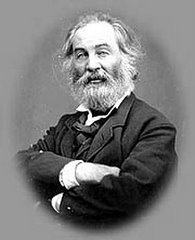
Walt Whitman had it right when he said: "I am vast; I contain multitudes." Similarly Emerson's statement: "Consistency is the hobgoblin of little minds." When confronted with this cacophony of disparate inputs from the brain we often trick ourselves into surety - a false one to be sure. It is the little attorney that resides in our rationality that spins these briefs and we accept them with great willingness. Take, for example, the experiments with people who have had their callosum calorum cut (the nerve tissue that connects the two hemispheres of the brain - done to reduce severe seizures); when through a special visual instrument different pictures are shown to the different hemispheres (each unaware of the other) and they are asked to point to what they saw, each hand points to a different picture. For example, one hand to a shovel and the other to a chicken foot. When asked to explain why these two, without exception the person will give what is to them a rational explanation: the chicken foot goes with the shovel because you need a shovel to clean out the chicken shit out of a shed. This is stated with absolute certainty. Our rational attorney will always provide us with a ready explanation and one that presents a false picture of a unified brain, even when there is none whatsoever. The need to supress inner contradictions is a fundmental property of the human mind.
Lehrer suggests the following to avoid falling into this trap of certainty. First of all, embrace uncertainty. Pretending that a mystery does not exist invites the dangerous pitfall of certainty. "Bad decisions happen when the mental debate is cut short, when an artificial consensus is imposed on the neural quarrel." This can best be done by (1) allowing yourself to entertain competing hypotheses; (2) continually remind yourself of what it is that you do not know. And finally keep in mind that you know more than you know. "The conscious brain is ignorant of its own underpinnings, blind to all the neural activity taking place outside of the prefrontal conrtex. That is why people have emotions: they are windows into the unconcious, visceral representation we process but don't perceive. The one thing that you should always be doing is considering your emotions, thinking why it is that you are feeling what you are feeling.
Walt Whitman had it right when he said: "I am vast; I contain multitudes." Similarly Emerson's statement: "Consistency is the hobgoblin of little minds." When confronted with this cacophony of disparate inputs from the brain we often trick ourselves into surety - a false one to be sure. It is the little attorney that resides in our rationality that spins these briefs and we accept them with great willingness. Take, for example, the experiments with people who have had their callosum calorum cut (the nerve tissue that connects the two hemispheres of the brain - done to reduce severe seizures); when through a special visual instrument different pictures are shown to the different hemispheres (each unaware of the other) and they are asked to point to what they saw, each hand points to a different picture. For example, one hand to a shovel and the other to a chicken foot. When asked to explain why these two, without exception the person will give what is to them a rational explanation: the chicken foot goes with the shovel because you need a shovel to clean out the chicken shit out of a shed. This is stated with absolute certainty. Our rational attorney will always provide us with a ready explanation and one that presents a false picture of a unified brain, even when there is none whatsoever. The need to supress inner contradictions is a fundmental property of the human mind.
Lehrer suggests the following to avoid falling into this trap of certainty. First of all, embrace uncertainty. Pretending that a mystery does not exist invites the dangerous pitfall of certainty. "Bad decisions happen when the mental debate is cut short, when an artificial consensus is imposed on the neural quarrel." This can best be done by (1) allowing yourself to entertain competing hypotheses; (2) continually remind yourself of what it is that you do not know. And finally keep in mind that you know more than you know. "The conscious brain is ignorant of its own underpinnings, blind to all the neural activity taking place outside of the prefrontal conrtex. That is why people have emotions: they are windows into the unconcious, visceral representation we process but don't perceive. The one thing that you should always be doing is considering your emotions, thinking why it is that you are feeling what you are feeling.
Thinking and Choking
 Big Frank is reading How We Decide by Jonah Lehrer - a book on understanding human decision-making. He makes use of recent findings in neuroscience in showing how it is that we make decisions. One of the interesting aspects of this is the interplay between emotional and rational choices. Sometimes the emotional comes quickly (the intuitive option) but often our rational side mistrusts that and begins to analyze us into error. As Lehrer puts it: "(One of the problems with feelings is that even when they are accurate they can still be hard to articulate.) Instead of going with the option of what feels best, a persons starts going with the option that sounds the best, even if it's a very bad idea."
In the mid 1980s Consumer Reports rated over 40 strawberry jams and ranked their results from 1 to 40. A California psychologist then tried a similar experiment with his graduate students. He chose four jams that had been rated 1st, 11th, 24th, 32nd, and 44th by the experts and asked his students to rank them. His students ranked the jams in the exact same order as the experts. Then he asked a different group of students to write out criteria to be used in ranking the jams and then to rank them. These students ended up ranking the jams in the exact reverse order - the worst as best and vice-versa.
What's going on here? The psychologist explained it this way: "that 'thinking too much' about strawberry jam causes us to focus on all sorts of variables that don't really matter. Instead of just listening to our instinctive preferences - the best jam is associated with the most positive feelings - our rational brain search for reasons to prefer one jam to another." People talk themselves in to liking the the worst over the best - they trip over their own minds: they choke. They relied too much on their rational brain, proving that there is such a thing as too much analysis, and this cuts one off from the wisdom of the emotions, "which are actually much better at assessing actual preferences."
Sunday, May 3, 2009
Trail of the Coeur d'Alenes
 Saturday was a gorgeous day - perfect for cycling. Big Frank and his good friend, Mandy, went to Idaho to try out the Trail of the Coeur d'Alenes. It was wonderful. Mandy was visiting to recruit students for her university in Arizona. Big Frank was showing her the wonders of the Spokane area - and cycling trails is certainly one of them.
They started in Harrison, Idaho, and went east along the trail into the chain of lakes and then back. There was lots of wildlife out: they saw moose, bald eagles, Canadian geese, and swans, in addition to the constant melody of the song birds. It's an almost level grade, and there were not very many others on the trail, so it was a great ride.
This is definitely a trail that Big Frank will be returning to ride again soon. Mandy rented her bike at the Peddle Pushers Bike Shop in Harrison. John and Sharon run that and they are terrific folks. Their shop was actually not open on Saturday when Big Frank called, but even though John had been planning to go into Coeur d'Alene to buy a refrigerator that day, he stayed until late morning in order to accommodate Mandy with a rental. Great folks.

Subscribe to:
Posts (Atom)